
Augmented Reality: Beyond the Hype - Practical Applications and Future Prospects
5 min read
17 Oct 2026
 By Prince Matthews
Welcome to the world of Augmented Reality (AR), where digital information blends seamlessly with the physical world to create immersive experiences. Beyond the hype, AR holds tremendous potential for practical applications across various industries, from education and healthcare to retail and entertainment. In this article, we'll explore the practical applications of AR, its current state, and future prospects.
Understanding Augmented Reality
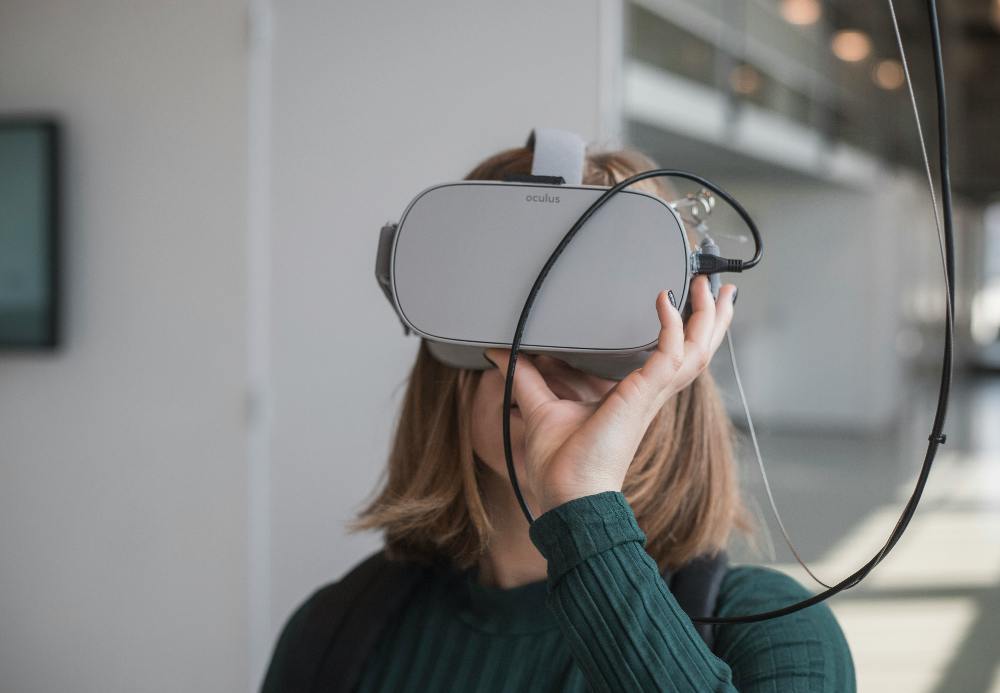
Augmented Reality overlays digital content, such as images, videos, or 3D models, onto the user's view of the real world, enhancing their perception and interaction with their environment. Unlike Virtual Reality (VR), which immerses users in entirely digital environments, AR integrates virtual elements into the physical world in real-time.
Practical Applications of AR
AR has practical applications across diverse sectors, including: 1. Education: AR enhances learning experiences by providing interactive and immersive educational content, such as virtual tours, simulations, and 3D models, fostering engagement and comprehension. 2. Healthcare: AR facilitates medical training, surgical planning, and patient education by overlaying medical imaging data, anatomical models, and diagnostic information onto the surgeon's field of view, improving precision and outcomes. 3. Retail: AR enables virtual try-on experiences, product visualization, and interactive shopping experiences, allowing consumers to preview products in their physical environment before making purchasing decisions.
Current State and Future Prospects
While AR technology has made significant strides in recent years, challenges such as hardware limitations, content creation complexity, and user adoption barriers remain. However, ongoing advancements in AR hardware, software, and content development are driving innovation and expanding the scope of AR applications.
Future prospects for AR include: 1. Wearable AR Devices: The development of lightweight, wearable AR glasses and headsets will enable hands-free AR experiences, increasing convenience and accessibility for users across various contexts. 2. Spatial Computing: AR technologies are evolving towards spatial computing, where virtual objects interact seamlessly with physical environments, enabling new forms of collaboration, communication, and productivity. 3. AR Cloud: The emergence of AR cloud platforms will create shared, persistent digital layers that overlay the physical world, facilitating location-based AR experiences and enabling seamless information sharing and collaboration.
Conclusion
In conclusion, Augmented Reality offers practical applications that extend beyond the initial hype, transforming how we learn, work, shop, and interact with the world around us. As AR technology continues to evolve, its future prospects are bright, with innovations in wearable devices, spatial computing, and AR cloud platforms poised to unlock new opportunities for immersive experiences and enhanced productivity.
FAQs
More Articles

Blockchain Scalability Solutions: Overcoming Limitations for Mass Adoption
4 min read | 02 Oct 2026

Privacy Coins: Enhancing Anonymity in Digital Transactions
6 min read | 01 Oct 2026

The Impact of Blockchain on Supply Chain Transparency
6 min read | 30 Sep 2026

Cryptocurrency Regulation: Balancing Innovation and Compliance
5 min read | 29 Sep 2026
More Articles

The Synergy of Tech World and Gaming: How Cutting-Edge Technology is Driving Gaming Forward
3 min read | 16 Oct 2026

AI in Gaming: Creating More Realistic and Immersive Virtual Worlds
3 min read | 15 Oct 2026
The Application of Neural Networks in Game User Experience and Personalization
2 min read | 14 Oct 2026
Quantum Computers and Game Theory: Exploring New Possibilities in Strategy Games
4 min read | 13 Oct 2026